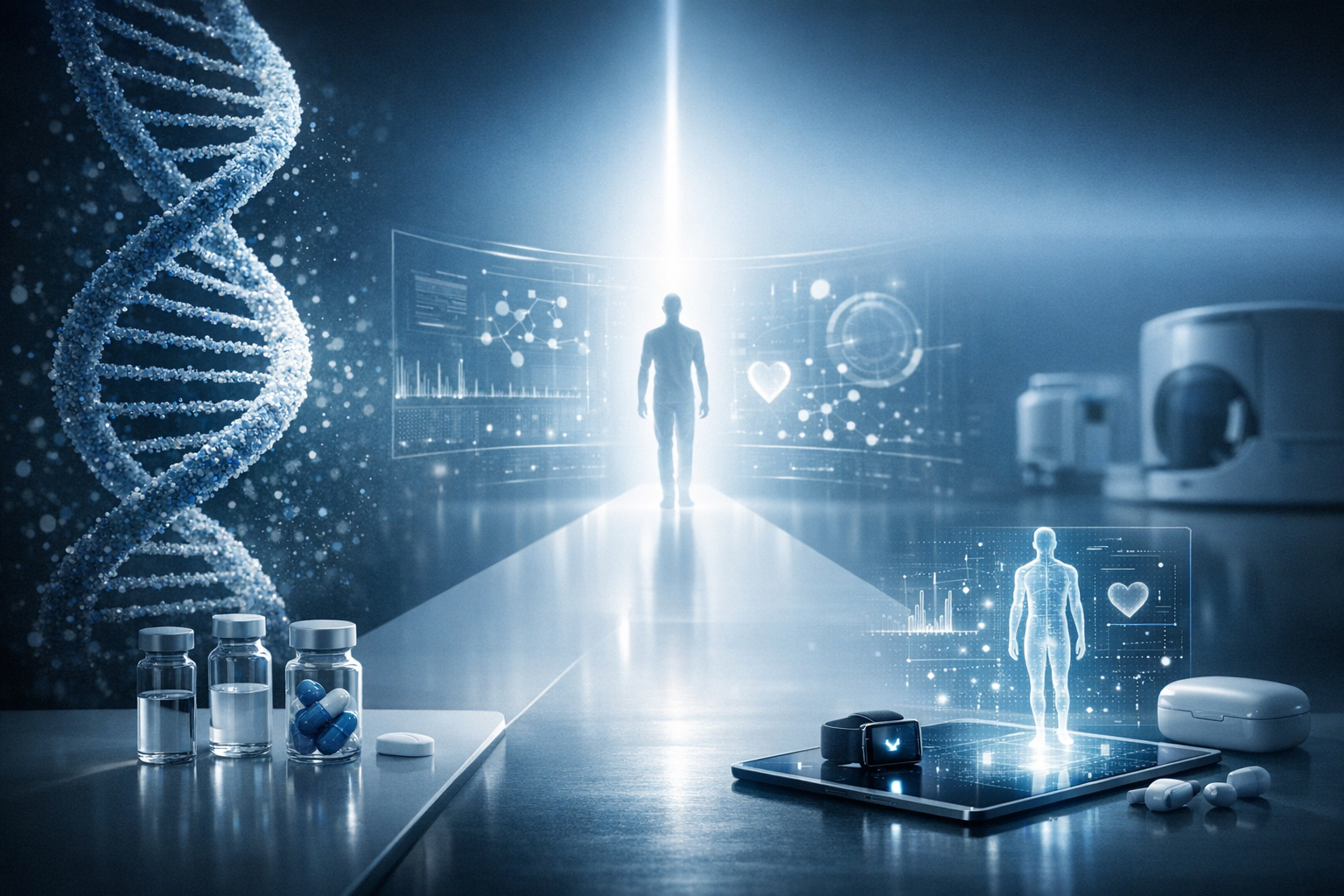

From lab-grown organs to AI that can predict a heart attack before symptoms appear, a new wave of biotechnology is quietly transforming how we diagnose, treat, and even prevent disease. These advances are not just improving patient outcomes; they’re redefining what modern healthcare looks like—from the tools in a doctor’s hands to the digital systems that keep clinics and research organizations running smoothly.
1. CRISPR and Next-Generation Gene Editing
Gene editing has moved from science fiction to clinical reality. CRISPR-based tools now let scientists precisely modify DNA, opening pathways to correct inherited diseases at their source. Clinical trials are already testing CRISPR therapies for conditions like sickle cell disease, beta thalassemia, and certain forms of blindness. Beyond curing rare diseases, researchers are exploring how gene editing might lower lifetime risk for common conditions such as high cholesterol or certain cancers.
The implications extend far beyond the patient’s bedside. Biotech companies developing gene therapies must navigate complex regulatory frameworks, long-term patient monitoring, and intricate financial and documentation workflows. Automating essential back-office tasks—like drafting detailed invoices for trials, lab services, and cross-border collaborations—saves critical time. Tools such as an online invoice generator pdf help research organizations and clinics standardize documentation, stay compliant, and keep their focus on innovation rather than paperwork.
2. mRNA Platforms Beyond COVID-19 Vaccines
The rapid development of mRNA vaccines against COVID-19 proved that messenger RNA can be safely used to trigger a powerful immune response. Now, biotech firms are adapting that same platform for other diseases. mRNA candidates are in development for influenza, RSV, HIV, and even certain cancers, with personalized cancer vaccines designed to target the specific mutations in an individual’s tumor.
Unlike traditional vaccines that require long, complex production cycles, mRNA formulations can be designed and manufactured in weeks. This agility opens the door to faster responses to emerging pathogens and more tailored treatments. As manufacturing scales up, data integration—from lab benches to supply chains—becomes central to ensuring quality and traceability at every step.
3. AI-Driven Diagnostics and Predictive Medicine
Artificial intelligence is reshaping diagnostics by spotting patterns in medical data that are invisible to the human eye. Deep learning systems can analyze imaging scans to detect early signs of cancer, diabetic retinopathy, and heart disease with high accuracy. Algorithms are also being trained on electronic health records to predict which patients are at highest risk of hospitalization, allowing clinicians to intervene earlier.
These tools don’t replace clinicians; they augment them. By triaging complex cases, flagging anomalies, and providing decision-support insights, AI allows doctors to work more efficiently and with greater confidence. The result is more precise diagnoses, fewer missed conditions, and more personalized care plans.
4. Cell and Gene Therapies for Once-Incurable Diseases
Cell and gene therapies are moving from experimental to mainstream treatment options. In CAR-T cell therapy, for example, a patient’s own immune cells are re-engineered to recognize and destroy cancer cells. Approved CAR-T therapies are already changing the prognosis for certain leukemias and lymphomas that previously had very poor outcomes.
Similarly, gene therapies that deliver functional copies of defective genes are providing long-lasting relief for inherited disorders, sometimes with a single infusion. While these treatments are still extremely expensive and complex to administer, they point toward a future where “one-and-done” therapies can replace years of chronic treatment.
5. Organoids and Organs-on-Chips
Tiny, lab-grown mini-organs—known as organoids—are providing realistic models of human tissues. Researchers are using organoids that mimic the brain, liver, gut, and other organs to study disease mechanisms, test drugs, and understand how infections spread. At the same time, organs-on-chips (microfluidic devices lined with living cells) recreate key aspects of organ function in a controlled environment.
These systems are already reducing reliance on animal testing and accelerating drug discovery by producing data that more closely reflect human biology. Over time, they may help personalize treatment—imagine testing multiple drug options on a patient’s own mini-tumor before deciding on a therapy.
6. Personalized and Precision Medicine
Advances in genomics, proteomics, and metabolomics are making it possible to tailor medical care to the individual. Instead of giving every patient with a condition the same standard treatment, clinicians can increasingly choose therapies based on a person’s unique molecular profile. In oncology, targeted drugs home in on specific genetic mutations driving a tumor, often with fewer side effects and better outcomes.
Precision medicine is expanding into cardiology, psychiatry, and autoimmune disease as well. Pharmacogenomic testing, for instance, can reveal how a person is likely to metabolize certain medications, helping physicians choose the most effective drug and dose from the outset.
7. Regenerative Medicine and 3D Bioprinting
Regenerative medicine aims to repair or replace damaged tissues rather than just managing symptoms. Stem cell therapies are being explored for conditions such as spinal cord injury, heart failure, and degenerative eye disease. Early successes are showing partial restoration of function in patients who once had no treatment options.
Meanwhile, 3D bioprinting uses bio-inks composed of living cells to print tissue structures layer by layer. While fully functional, transplantable organs are still a long-term goal, bioprinted skin, cartilage, and simple tissues are already in development and use. These technologies could eventually shorten transplant waiting lists and reduce rejection by allowing tissues to be grown from a patient’s own cells.
8. Microbiome-Based Therapies
The trillions of microbes living in and on the human body influence everything from digestion and immunity to mood and metabolism. Scientists are learning how imbalances in this microbiome contribute to conditions like inflammatory bowel disease, obesity, and even certain neurological disorders.
Microbiome-based therapies—ranging from targeted probiotics to live biotherapeutic products and fecal microbiota transplants—aim to restore healthy microbial ecosystems. As diagnostic tools improve, treatments may become highly tailored, with specific microbial strains prescribed to rebalance an individual’s gut or skin microbiome.
Conclusion: A New Infrastructure for a New Era of Medicine
Biotech breakthroughs are reshaping every layer of medicine: how we discover drugs, design therapies, diagnose disease, and manage patient care. CRISPR, mRNA platforms, AI diagnostics, cell and gene therapies, organoids, precision medicine, regenerative approaches, and microbiome science are converging to make healthcare more proactive, personalized, and effective.
To fully realize the promise of this new era, the surrounding infrastructure must evolve as well. That means not only updating clinical tools and data systems but also streamlining the operational work that underpins research and treatment. Organizations that pair scientific innovation with efficient, digital-first workflows will be best positioned to bring these advances from the lab to the people who need them most.